
> Fibla carpenteri
An inocelliid snakefly described from a single female holotype in Baltic amber. Hyaline wings with brown venation; long neck; predatory mouthparts - wikipedia 
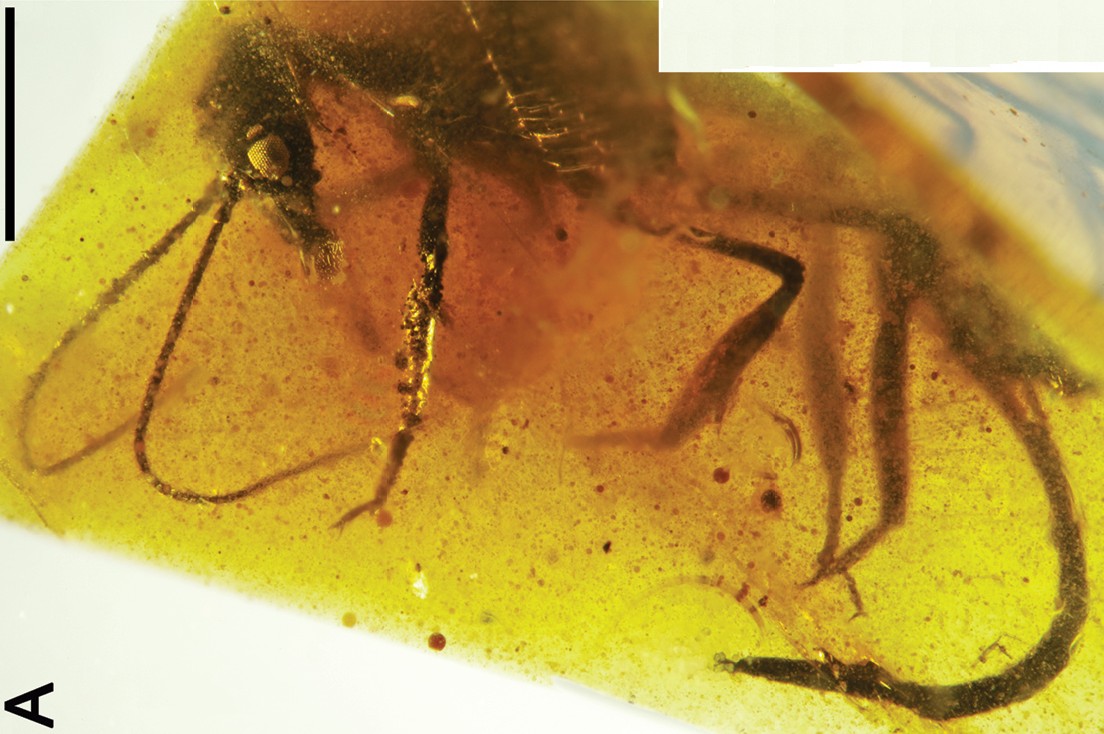
Alavaraphidia imperterrita gen. et sp. n., holotype MCNA 13608. A lateral habitus Scale bars: A = 1 mm. (Spanish amber snakefly) - wikimedia  .
Original source
Perez de la Fuente R, Penalver E, Delclos X, Engel MS (2012) Snakefly diversity in Early Cretaceous amber from Spain (Neuropterida, Raphidioptera). ZooKeys 204: 1-40. - zookeys
.
Original source
Perez de la Fuente R, Penalver E, Delclos X, Engel MS (2012) Snakefly diversity in Early Cretaceous amber from Spain (Neuropterida, Raphidioptera). ZooKeys 204: 1-40. - zookeys
# Metadata Geological Age: Mid-Eocene (~44 million years ago) Location: Baltic amber (northern Europe) Size: just over 18 mm (largest snakefly known from amber) Environment: Mixed conifer–hardwood forests producing abundant resin.
# Habitat & Ecology - Climate: Mild with seasonal variation; rich in flowering plants. - Landscape: Forest canopy with dense understory; resin-producing trees abundant. - Role: Active predator of soft-bodied insects.
# Diet - Aphids, small flies, and larvae taken on bark and foliage.
## Predators - Small birds, predatory wasps, lizards.
# Behaviour - Hunting: Ambush predator, clinging to bark or foliage, striking with long neck. - Flight: Short bursts; primarily a stalk-and-pounce hunter. - Breeding: Eggs laid under bark; larvae lived in crevices.
# References
- Psyche (1995) — original description
- Holotype photo noted (Harvard MCZ; credited) - morethanadodo.com
- MCZbase — Museum of Comparative Zoology database
# See - Eophyllium messelensis - Bombus cerdanyensis