
De-extinction (also known as resurrection biology, or species revivalism) is the process of generating an organism that either resembles or is an extinct organism.
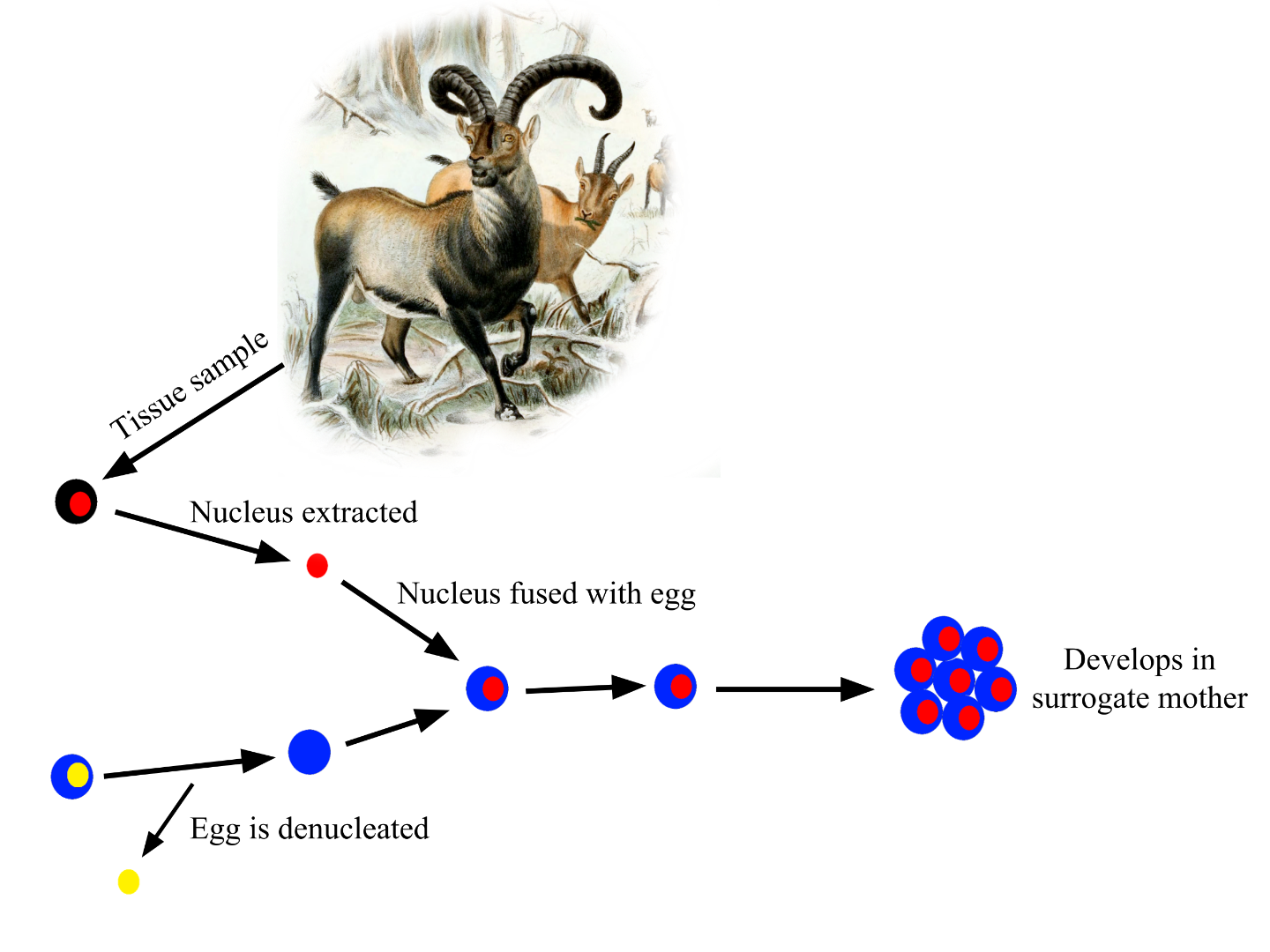
Pictured above is the process used to clone the Pyrenean ibex. The tissue culture was taken from the last living, female Pyrenean ibex named Celia. The egg was taken from a goat (Capra hircus) and the nucleus removed to ensure the offspring was purely Pyrenean ibex. The egg was implanted into a surrogate goat mother for development - wikimedia 
There are several ways to carry out the process of de-extinction. Cloning is the most widely proposed method, although genome editing and selective breeding have also been considered. Similar techniques have been applied to certain endangered species, in hopes to boost their genetic diversity. The only method of the three that would provide an animal with the same genetic identity is cloning.
There are benefits and drawbacks to the process of de-extinction ranging from technological advancements to ethical issues - wikipedia 